
The Emotional Side of Care Decisions: Managing Guilt, Fear, and Family Conflict
Supporting families through the emotional journey of caring for ageing parents with clarity, compassion, and professional home care solutions.

HeroGeneration
Published on April 3, 2026
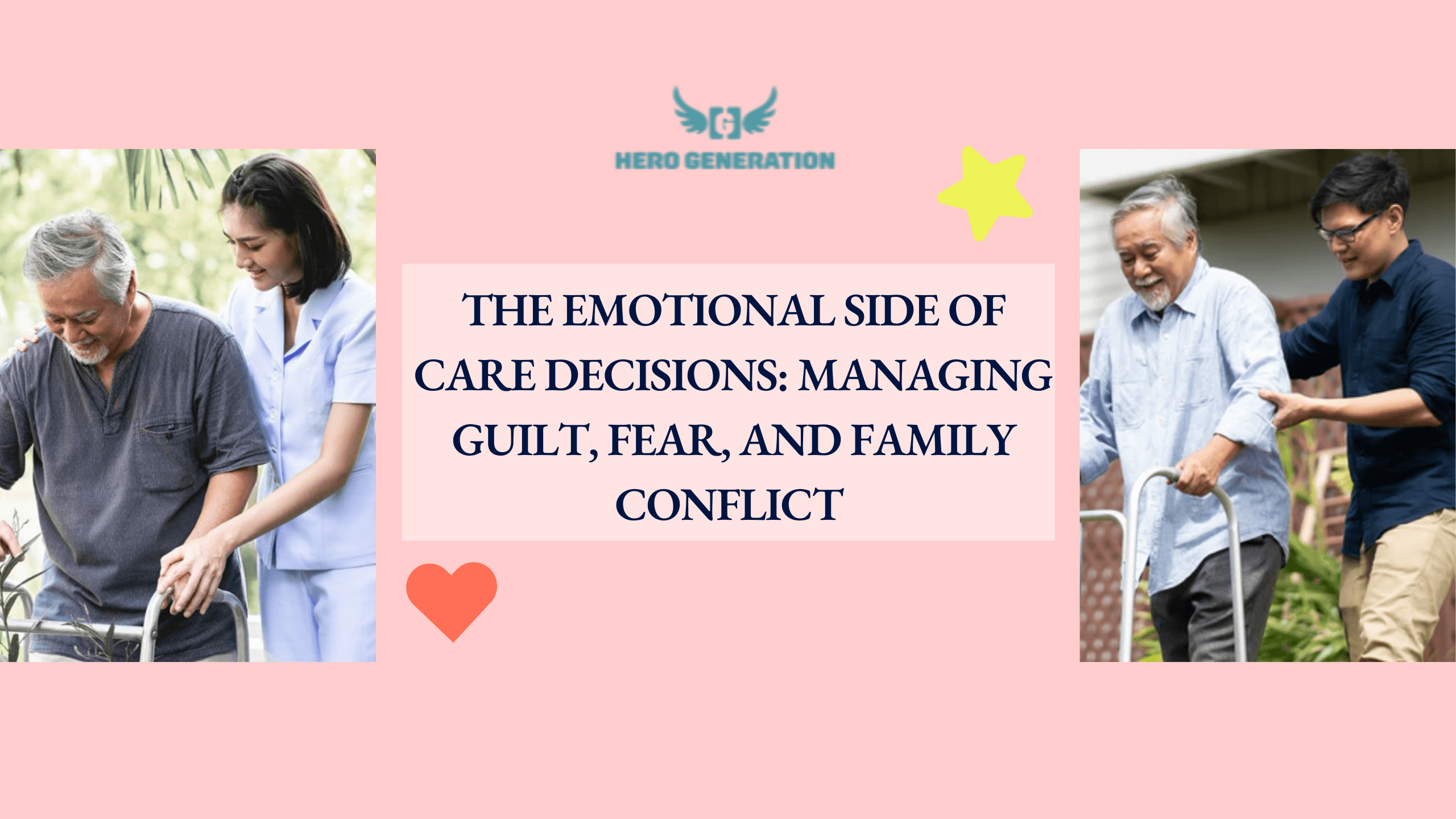
As a responsible family member, you are often under constant stress from looking after your parents and loved ones. But at the same time, we have professional responsibilities and often have to be away from home for work. Care for seniors at home is our top priority, along with our duties and responsibilities, but guilt for not being there all the time can be daunting. The decision to care for seniors at home is very emotional. For many families, it begins with small changes, missed appointments, forgotten medications, reduced mobility, or subtle cognitive shifts. At first, it feels manageable. Choosing home care for an ageing parent is not simply about logistics. It brings up guilt, fear, responsibility, cultural expectations, financial concerns, and often, family conflict. And while brochures focus on services and packages, the emotional side of the decision is where most families truly struggle.
If you're navigating this stage right now, know this: what you're feeling is normal. And with the right support, it doesn't have to divide your family; it can bring clarity and relief.
Why Care Decisions Feel So Heavy
Well, it is a highly emotional decision; on one side, you have parents who are waiting for their child/ children to look after you, on the other hand, you are juggling work, your own family responsibilities, and your ageing parents' needs. The people who once protected and guided you may now need support themselves.
This reversal creates emotional tension because:
We associate independence with dignity.
We fear overstepping or taking control.
We don’t want our parents to feel like a burden.
We question whether outside support means we’ve “failed.”
But here’s a truth many families don’t hear often enough: Choosing home care for seniors is not giving up. It’s stepping up, strategically and comp
The Guilt: “I Should Be Doing More”
Guilt is the most common emotion families experience.
You may think:
“I should be able to manage this myself.”
“Other families cope without help.”
“Mum looked after me; now it’s my turn.”
“Hiring help feels impersonal.”
But caregiving today is vastly different from decades ago. Families are often geographically dispersed. Many adult children are balancing careers, children, and financial pressures. Providing safe, consistent care is not about proving devotion. It’s about ensuring professional, reliable support. Burnout helps no one. Exhaustion leads to mistakes. And emotional strain can damage relationships. Sometimes, the most loving decision is recognising that professional support can strengthen the entire family dynamic.
“What If Something Goes Wrong?”
Fear shows up in multiple forms:
Fear of choosing the wrong provider
Fear of reduced independence
Fear of accelerating decline
Fear of financial strain
Fear of family judgment
It’s also common to worry about how a parent will react. Will they resist? Feel insulted? Withdraw? This is why structured, respectful care for seniors at home is so important. When introduced thoughtfully, home care doesn’t take independence away; it protects it.
Rather than waiting for a crisis, proactive support:
Reduces fall risks
Improves medication management
Prevents hospital readmissions
Maintains daily routines
Preserves social engagement
Fear often fades when families see support working in real time.
When Families Disagree
Few decisions trigger family tension like elder care.
One sibling may believe help is urgent. Another may insist, “It’s not that bad.” Someone may feel financial pressure. Another may feel excluded from the conversation.
Common sources of conflict include:
Unequal caregiving responsibilities
Financial contribution disagreements
Emotional denial
Different risk tolerances
Communication gaps
What’s often underneath the argument isn’t disagreement, it’s grief.
Grief for changing roles, ageing and the parent you once knew. Recognising this emotional layer can help families approach conversations with empathy rather than accusation.
How to overcome this challenge of the emotional landscape?
Start Conversations Early
Don’t wait for a crisis. Early, gentle discussions allow seniors to express their wishes and preferences. Frame the conversation around support, not decline:
“How can we make things easier for you?”
“What would help you feel safer at home?”
“What would give you more freedom?”
When seniors feel heard, resistance decreases.
Separate Emotion from Practical Planning
It helps to divide discussions into two parts:
Emotional concerns
Practical logistics
Acknowledge feelings openly. Then focus on concrete steps:
Safety assessments
Care schedules
Budget considerations
Health requirements
Clarity reduces anxiety.
Share Responsibility Transparently
If siblings are involved, outline roles clearly:
Who manages appointments?
Who oversees finances?
Who communicates with care providers?
Defined responsibilities prevent resentment from building quietly over time.
Recognise That Independence Can Look Different
Many families assume independence means “doing everything alone.”
In reality, independence can mean:
Living at home safely
Choosing daily routines
Maintaining familiar surroundings
Staying socially connected
Professional home care supports independence; it doesn’t replace it.
Why Home-Based Support Eases Emotional Strain
Compared to residential transitions, home care for seniors offers emotional continuity. Remaining in familiar surroundings:
Preserves identity
Maintains community ties
Reduces cognitive stress
Supports mental well-being
Home is more than a physical space. It carries memories, routines, and comfort. When care adapts to the home environment, families often find that tension decreases. There is less urgency, less upheaval, and more stability.
The Relief Families Don’t Expect
Many families describe a surprising emotion after arranging home care:
Relief that someone trained is monitoring health changes.
Relief that medication is managed properly.
Relief that their parent has companionship during the day.
Relief that they can return to being a son or daughter, not just a caregiver.
This shift often strengthens relationships rather than weakening them.
When care is structured and supported, family visits become about connection again, not constant supervision.
Final Thoughts
If you are wrestling with guilt, fear, or family disagreement, pause and remember that you are not choosing between love and support, but you are choosing both. Professional care for seniors at home can preserve dignity, reduce stress, and restore balance, not just for your parent, but for everyone involved. At Hero Gen, we walk alongside families during this transition, offering clarity, compassion, and carefully structured care that adapts as life evolves because the goal isn’t simply to assist. It’s to help families feel confident in the decisions they make today and in the years ahead.